If you have taken biology classes, you have likely read about ATP (Adenosine Triphosphate), the “energy currency” of our bodies. As you may recall, ATP resides within our cells and yields energy through its metabolic cycle to fuel vital cellular functions.
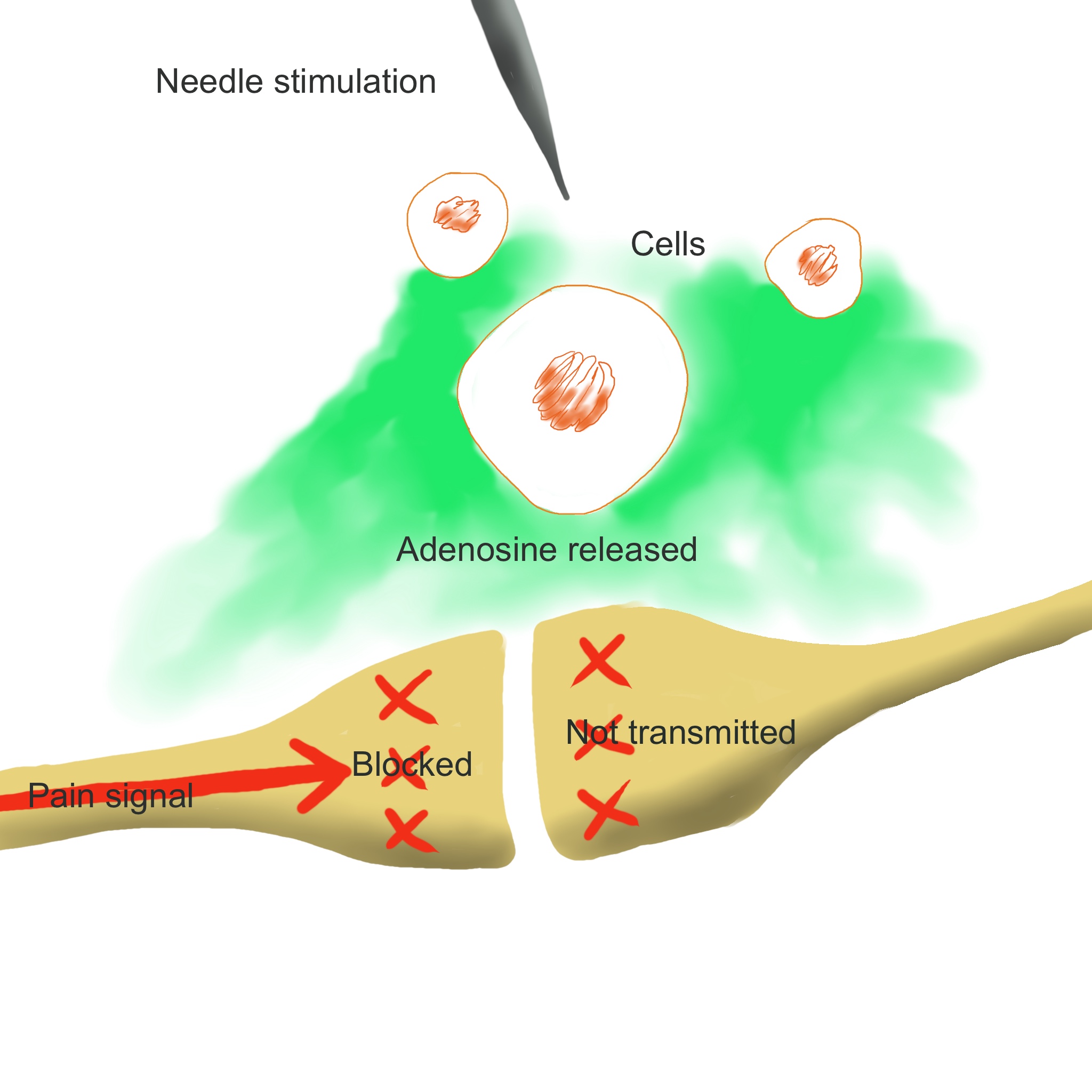
When cells are stimulated or disturbed through an acupuncture session, ATP is known to leak into the extracellular space. It does not remain in this form for long; through a series of metabolic steps (ectonucleotidase activity), it is broken down into adenosine.
Adenosine then binds to A1 receptors distributed throughout the body, including the central nervous system, cardiovascular system, and peripheral tissues. This binding triggers two primary inhibitory actions:
- Presynaptic Inhibition: It blocks calcium channels at the nerve endings. Because calcium entry is required for vesicle docking, its absence prevents neurotransmitters like Substance P and glutamate from being released toward adjacent neurons.
- Postsynaptic Inhibition: Adenosine opens potassium channels on the “receiving” neurons. As potassium leaves the cell, the neurons become hyperpolarized (more negatively charged), making them significantly harder to excite.
By inhibiting the “sender” and “silencing” the “receiver,” adenosine ensures that pain signals are effectively dampened at the synapse. A 2010 study (Goldman et al.) confirmed this mechanism in action, showing that adenosine levels spiked significantly following the stimulation of acupuncture point ST 36 (足三里), providing a biological explanation for the practice’s analgesic effects.