

Studies indicate that cervical spondylosis—the age-related “wear and tear” of the cervical spine—is nearly ubiquitous. It affects approximately 50% of people over age 40 and 85–90% of those over age 60. While this degeneration can lead to bone spurs and dehydrated discs, it is often asymptomatic. Most individuals with these radiological findings do not experience neck pain, occipital headaches, or the numbness, tingling, and weakness in the arms known as radiculopathy.
Except in severe cases like cervical myelopathy—a serious condition where the spinal cord itself is compressed—most symptoms are manageable through conservative care, such as physical therapy or bodywork.
In modern clinical practice in the U.S., acupuncture has become a prominent conservative intervention. In my experience, it is highly effective; numbness and radiating pain often dissipate after several weekly or bi-weekly sessions, though results vary by case.
When patients experience neck pain or neurological symptoms in the hands, it indicates nerve impingement. While severe cases may involve structural damage requiring surgical intervention, researchers and clinicians increasingly agree that the culprit is often not the bone, but the surrounding soft tissues: the tendons, ligaments, and muscles.
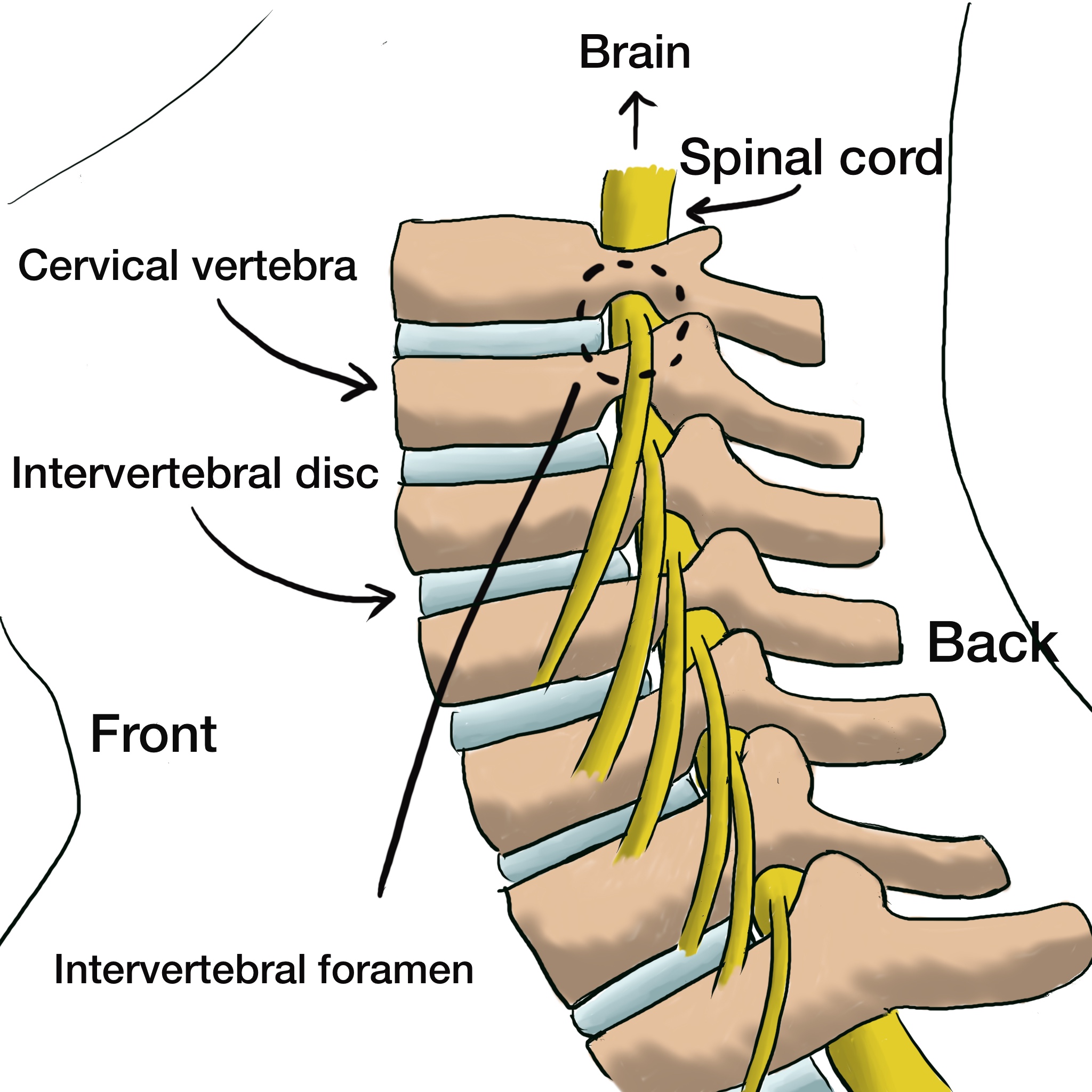
Statistically, the intervertebral foramen (the bony passageway for nerve roots) is significantly larger than the nerve roots themselves—often up to three times the diameter. Therefore, simple vertebral “compression” rarely causes neurological symptoms on its own.
Instead, the primary issue is typically the tightening of cervical muscles and ligaments. Poor circulation and localized inflammation in these tissues can impair nerve conductivity, triggering pain and paresthesia. Acupuncture excels here, working to reduce inflammation and soften hypertonic tissues to restore normal function.
*Individual results may vary.
